



 Search...
 English
Can a Plastic Stool Mould Produce Stackable Stools for Space-Saving Storage
A stool may take up little room when used on its own, yet several stools can occupy a noticeable area when placed side by side. Homes, dining spaces, waiting areas, storage rooms, and temporary venues often need seating that can be moved away when it is no longer needed. Vertical stacking provides a simple way to deal with that change.
A stackable stool is shaped so one unit can sit partly inside another. Instead of placing every seat on a separate area of the floor, several units can share nearly the same footprint during storage. Such an arrangement can make handling easier while leaving more open space for other items.
Plastic is often suitable for this type of furniture because its shape can be formed as part of the manufacturing process. Curved edges, hollow areas, angled legs, and spaces beneath a seat can all be created through mould design. As a result, storage needs need to be considered before production rather than treated as an extra feature afterward.
A useful stacking structure needs more than a narrow overall shape. Each stool must have enough clearance for another unit to move into position without becoming stuck. At the same time, the stacked pieces should remain reasonably stable once placed together.
Can A Plastic Stool Mould Create A Stackable Structure
Yes, a plastic stool mould can be designed around a stacking structure. The important point is that the mould follows the intended shape of the finished product, so the stacking relationship needs to be considered while the stool is still being designed.
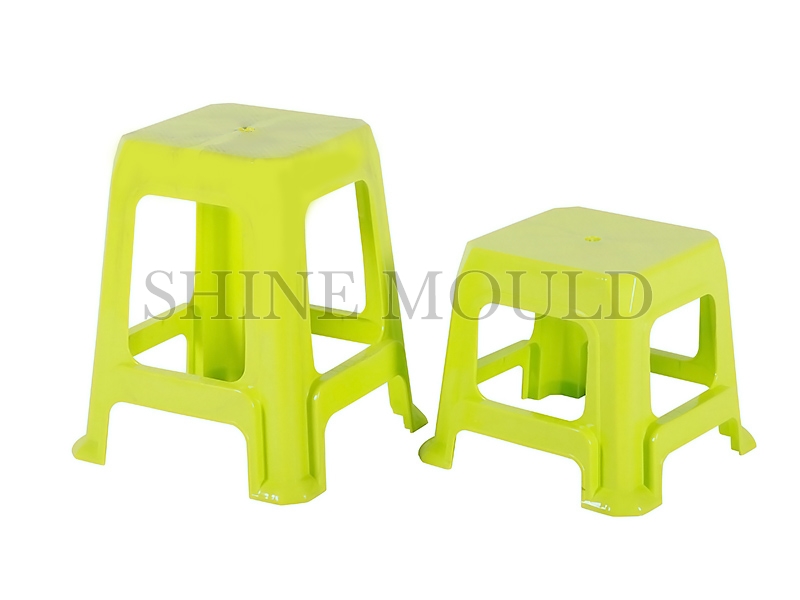
A simple example is a stool with a slightly wider seat and legs that leave open space underneath. When another stool is placed above it, the upper legs can move into the open area of the lower unit. A suitable mould can form those spaces and curves as part of the stool body.
Stacking also depends on how several areas work together. A seat that looks suitable from above may still create problems when the legs are considered. One leg could interfere with another stool, or a recessed area may not provide enough room for the upper seat.
For that reason, designers normally look at the stool as both an individual product and a group of identical products.
Several questions are useful during early design:
- Where will the upper stool enter the lower one?
- Which parts will guide the two units into position?
- Where should enough open space remain?
- Can stacked units be separated without excessive effort?
- Will the structure remain suitable for normal sitting use?
Thinking about those questions early can reduce changes later in mould development.
How Does Stool Shape Affect Stacking
Shape has a direct relationship with how stools fit together. A slightly tapered body can allow one unit to move into another more naturally, while straight vertical sides may leave less room for nesting.
Leg placement is also important. Four legs, for example, need enough space between them to receive the corresponding parts of another stool. Their position, direction, and connection with the seat all influence the path taken during stacking.
A seat can also include a recessed underside. Such an area gives the upper stool somewhere to move as it is lowered. Without suitable clearance, two units may touch too early and stop before reaching a stable position.
The outer profile matters as well. Rounded corners can change the available space around the seat and legs, while wider sections may prevent close nesting. A shape that works well as a single stool may therefore need adjustment when storage is part of the intended use.
Stacking should also allow easy separation. A group of stools that fits together too closely may be difficult to pull apart. Small differences in surface contact, shape, and clearance can affect how readily one unit comes away from another.
Which Mould Details Help Create A Stable Stack
Once the product shape has been established, mould design needs to reproduce that shape consistently. Areas responsible for stacking require particular attention because a small change in position can affect how one stool fits inside another.
Seat edges, leg openings, underside recesses, and contact areas all contribute to the final relationship between units. A mould must form each area with enough consistency for the finished stools to follow the same stacking path.
Internal support structures can also be used beneath a seat or around the legs. Such features may help maintain the shape of a relatively large plastic surface while keeping open areas available for nesting.
Parting areas within a mould need to follow the product shape in a practical way. A poorly positioned separation line can interfere with edges or leave unwanted marks around areas that need to fit closely during stacking.
Another consideration is removal from the mould. A structure that is easy to stack is not necessarily easy to release after forming. Designers need to consider both functions together so the desired recesses and projections can be produced without making removal unnecessarily difficult.
How Does Material Flow Affect A Stackable Stool
Plastic enters the mould in a softened state and needs to reach different parts of the stool before it cools and takes its final shape. Seat surfaces and legs may have different shapes, so the material needs to spread through the available space without creating major differences in the finished form.
Wall thickness can influence how a product changes during cooling. Uneven areas may shrink at different rates, which can affect the shape of legs, seat edges, or nesting sections. Even a small change in one area can become noticeable when several identical stools are stacked together.
| Design Area | Possible Concern | Effect on Stacking |
|---|---|---|
| Seat underside | Insufficient clearance | Upper stool may stop too early |
| Leg position | Uneven spacing | Units may not align smoothly |
| Outer edge | Shape changes during cooling | Contact may become uneven |
| Support areas | Excessive or uneven material | Nesting space may be reduced |
| Recessed sections | Distortion during forming | Separation may become harder |
Material flow also needs to suit the overall shape. A well‑planned structure can help the plastic reach the seat and legs in a more balanced manner, reducing unwanted changes in areas that control stacking.
For a Plastic Chair Mould Factory, such considerations connect product design with mould construction and production conditions. A stackable stool is therefore not created simply by adding a storage feature to an existing shape. Its nesting ability begins with the relationship between the stool's form and the mould that produces it.
Why Is Demoulding Important for Stackable Stools
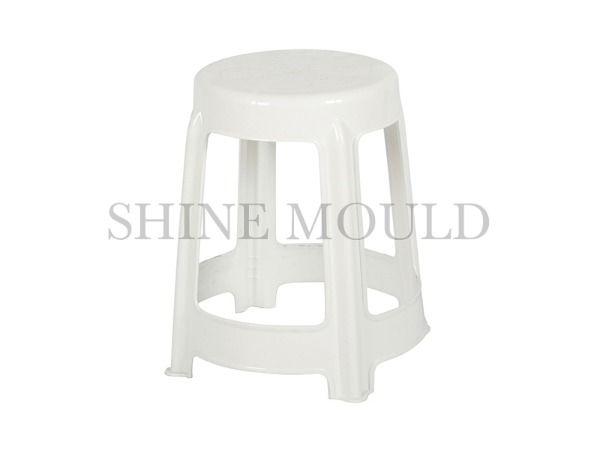
Once a plastic stool has taken shape inside a mould, it still needs to come out without losing the form created during production. Demoulding becomes especially relevant for a stackable stool because recessed areas, angled legs, and spaces beneath the seat may affect how the product separates from the mould.
A mould generally needs a practical opening direction. Product features should not create unnecessary resistance during removal, especially around areas that later help one stool fit into another. Deep recesses or sharply changing surfaces can make release more difficult when their shape is not considered together with the mould structure.
Smooth transitions can make the process easier to manage. Rounded edges and suitable slopes may allow a finished stool to separate more naturally, while abrupt changes in shape can increase contact between the product and mould surface.
Several areas deserve attention during design:
- Leg sections need enough clearance for removal.
- Recessed areas should not trap the finished piece.
- Seat edges need to retain their intended shape after release.
- Support features should not interfere with mould opening.
- Stacking surfaces need to remain free from unwanted deformation.
Demoulding also has a connection with surface condition. Excessive resistance during removal can affect edges or small structural features. Since those areas may later touch another stool during stacking, keeping their intended form matters for storage as well as appearance.
What Should A Plastic Chair Mould Factory Consider In Lid Design
A Plastic Chair Mould Factory needs to look at a stackable stool as a complete product rather than focusing only on the outer appearance. Mould construction, product shape, material behavior, assembly, and production handling all have a role in the final result.
The relationship between the seat and legs deserves early attention. A stool intended for stacking needs open areas in suitable positions, while support sections still need to connect properly with the seat. Mould surfaces must reproduce both requirements at the same time.
Consistency is another practical concern. Several stools are expected to fit together because their shapes follow the same design. Small differences in important areas can make stacking less smooth, particularly around leg spacing and underside clearance.
Mould maintenance also deserves consideration. Contact surfaces can gradually change through repeated production and handling. Regular inspection helps identify wear around areas that influence the stool's shape.
A practical design process can therefore include:
- Checking the intended stacking path.
- Reviewing the mould opening direction.
- Examining areas where parts may interfere.
- Considering how material reaches different sections.
- Checking whether finished products retain their intended shape.
Such steps connect the original storage requirement with actual mould construction instead of treating stacking as a separate concern.
How Can The Mould Support Easy Storage Without Making The Stool Difficult To Use
Space saving is only one part of stool design. A product still needs to function as a seat when it is taken out of storage. Making the body narrower does not automatically create a useful stacking structure, since excessive reduction in open areas may affect stability or sitting comfort.
A suitable shape usually comes from balancing several requirements. Space beneath the seat needs to accommodate another unit, while the legs still need to provide support. Seat edges need enough structure to retain their shape, while the outer profile should not make stacking unnecessarily difficult.
The difference between storage and use becomes clear when considering movement. During stacking, one stool moves vertically toward another. During use, a person places weight on the seat while the legs remain in contact with the floor. Both situations place different demands on the same structure.
For that reason, design decisions can be viewed from two positions:
During storage
- Units should have a clear nesting path.
- Contact should occur in intended areas.
- Separation should remain manageable.
- Stacked pieces should stay reasonably stable.
During use
- Legs need suitable support.
- The seat should retain its intended shape.
- Contact with the floor should remain stable.
- Open areas created for nesting should not interfere with normal use.
A mould needs to reproduce a shape that works in both situations. Storage efficiency alone cannot define the entire design.
What Problems Can Prevent Proper Stacking
Stacking problems may appear even when the basic stool shape seems suitable. Small changes in geometry can affect how one unit enters another, particularly around areas where several parts come close together.
One common concern is deformation. Plastic can change shape during cooling, handling, or later use. A leg that moves slightly from its intended position may interfere with another unit during stacking.
Another issue can occur around the underside of the seat. Too little clearance may cause an upper stool to stop before reaching its intended position. Excessive contact in one area can also make separation harder.
Surface condition may play a role as well. Rough areas, unwanted material, or uneven edges can increase contact between stacked units. Such problems may originate during mould production, forming, or later handling.
Mould wear can gradually influence product consistency too. When a mould surface changes, corresponding areas on the finished stool may also change. A small variation that is difficult to notice on one unit can become more obvious when several stools are placed together.
| Stage | What To Check | Why It Matters |
|---|---|---|
| Product design | Leg position and open space | Sets the basic nesting relationship |
| Mould construction | Shape and opening direction | Affects how the stool is formed and released |
| Production | Cooling and product shape | Can influence dimensional consistency |
| Finished stool | Fit between units | Shows whether the intended stacking path works |
| Storage | Contact and separation | Reveals practical handling issues |
Looking at only one stage can make the cause harder to identify. A stacking problem may begin with the product shape, arise during mould construction, or appear after forming.
How Does A Plastic Stool Mould Turn Storage Needs Into Product Design
A request for space‑saving storage begins with a simple practical need: several stools should occupy less floor area when they are not being used. Turning that need into a workable product requires a chain of decisions.
First, the stool needs a shape that allows one unit to enter another. Seat width, leg placement, underside clearance, and outer contours all influence that relationship. Once the intended shape is clear, mould construction needs to reproduce those features while allowing practical production and release.
Material behavior then becomes part of the process. During forming and cooling, the product needs to retain the areas that control stacking. A small change in a leg, edge, or recessed section can affect how finished units fit together.
Production also needs to consider the relationship between individual stools. A stack is made from several separate products, so consistent positioning and shape matter during actual storage.
For a plastic stool mould, space‑saving performance therefore begins long before several stools are placed in a storage area. It starts with product geometry, continues through mould design and forming, and ends with the way finished units nest, separate, and return to normal use.
A well‑planned stacking structure is not simply a matter of making one stool fit inside another. It involves giving every stage of production a clear role in creating a shape that can be formed, released, used, stacked, and stored without unnecessary complications.
.jpg)
.jpg)
.jpg)
