



 Search...
 English
Enhancing Mold Quality Through Mold Flow Analysis
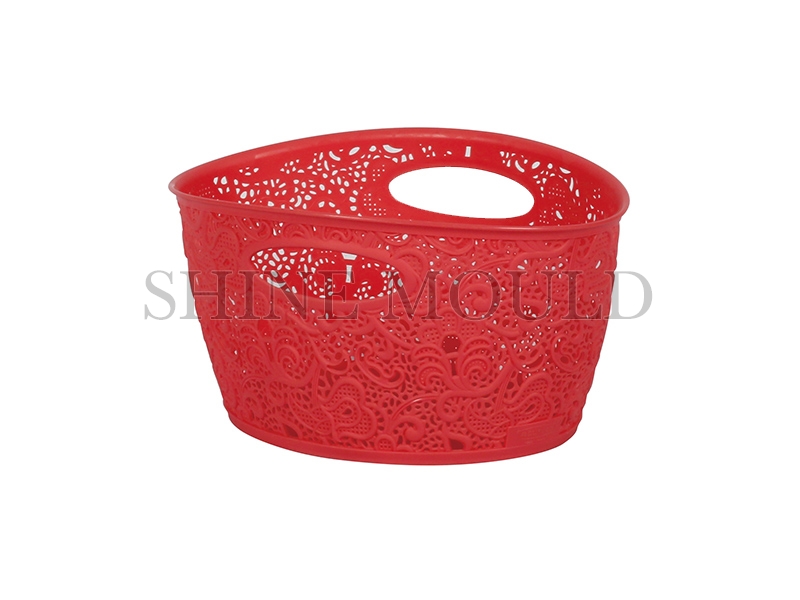
One of the effective tools for this purpose is Mold Flow Analysis. By simulating the injection process, manufacturers can predict potential defects and optimize the molding process. For products like a Basket Mould, Mold Flow Analysis is especially valuable in improving surface finish, dimensional accuracy, and structural integrity.
Understanding Mold Flow Analysis
- Definition: Mold Flow Analysis is a computer-aided simulation that models the behavior of molten plastic as it fills a mold cavity.
- Purpose: The primary goal is to anticipate and prevent issues such as warpage, sink marks, air traps, and incomplete filling before actual production begins.
- Software tools: Popular software includes Autodesk Moldflow, Moldex3D, and SolidWorks Plastics, which provide detailed visualizations of flow patterns, pressure distribution, and temperature profiles.
Benefits of Mold Flow Analysis
Reducing defects:
- Identifies areas prone to weld lines, voids, or short shots.
- Allows adjustments in gate location, runner design, and injection parameters to prevent defects.
Optimizing material usage:
- Ensures uniform material flow, reducing the need for excess plastic.
- Reduces scrap, lowering production costs.
Enhancing cycle efficiency:
Predicts cooling times and flow rates, enabling shorter cycle times without sacrificing quality.
Application in Basket Mould Design
- Gate placement optimization:
Proper gate locations ensure even flow distribution, reducing stress and potential warpage in the finished basket.
Multiple gates may be simulated to determine the effective arrangement for complex geometries.
- Wall thickness evaluation:
Uniform wall thickness prevents sink marks and warping.
Mold Flow Analysis can highlight areas that require thickness adjustments for consistent quality.
- Flow pattern visualization:
The simulation shows the molten plastic’s path, highlighting potential air traps or hesitation points.
Designers can modify venting or gating to eliminate defects before mold fabrication.
Process Parameter Optimization
1. Injection pressure and speed:
Mold Flow Analysis provides data to adjust pressure and speed for suitable fill and stress.
This ensures the basket retains shape accuracy and structural strength.
2. Temperature control:
Simulation identifies critical areas where temperature may vary, causing inconsistent flow.
Adjusting mold heating or cooling channels can improve part quality.
3. Material selection guidance:
The analysis predicts behavior for different polymer types, helping select the right plastic for strength, flexibility, and surface finish.
Troubleshooting with Mold Flow
- Predicting warpage and shrinkage: Simulations show potential areas of dimensional deviation, allowing preemptive design changes.
- Reducing internal stresses: Uneven cooling or flow patterns can create stress concentrations. Mold Flow Analysis enables redesigns that reduce residual stress.
- Air trap and void reduction: By identifying where air is likely to be trapped, designers can add vents or adjust gates to prevent internal voids.
Economic and Quality Advantages
- Reducing prototyping costs: Virtual testing reduces the need for multiple physical prototypes.
- Faster time-to-market: Simulation-driven design decisions accelerate the development process.
- Improved product reliability: The finished basket achieves higher durability, consistent appearance, and reduced rejection rates.
Mold Flow Analysis is a powerful tool for enhancing molding quality, especially for complex items like a Basket Mould. By simulating material behavior, optimizing gate placement, adjusting wall thickness, and fine-tuning process parameters, manufacturers can significantly improve part quality and production efficiency. Incorporating Mold Flow Analysis into the design and production process not only reduces defects and material waste but also ensures a reliable, cost-effective, and high-quality final product. For any plastic product manufacturer, investing in Mold Flow Analysis is a strategic approach to maintain competitive quality standards.

.jpg)
.jpg)
