 Search...
 English
How Can Auto Mold Design Reduce Production Difficulties
A single clip that won't release cleanly can stall a whole molding line. A vehicle holds hundreds of plastic, metal, and composite parts, and each has its own shape, job, and assembly demands. Turning those designs into consistent products gets hard when parts are complex or have to mate tightly with their neighbors.
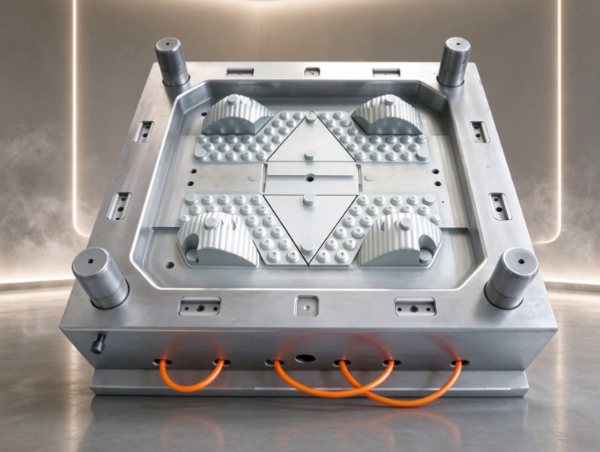
The mold sits at the center of that effort. It decides how material is formed, how the part comes out, how the equipment runs, and how the finished piece fits. If the mold isn't thought through, teams end up with repeated tweaks, wasted material, stoppages, and uneven quality.
A well-planned design catches many of these problems before the first shot. Engineers can spot trouble early, simplify steps, and make the mold easier to run and service. Production becomes more predictable because decisions were made up front instead of patched in later.
Catching Problems Before the Mold Is Built
Many production headaches start long before a mold reaches the workshop. They grow out of how product geometry, material behavior, mold structure, and manufacturing needs interact. A shape that looks simple on screen can cause surprises in molding or assembly.
Automotive parts carry curves, recesses, mounting points, openings, and ribs. Each has a purpose, and each makes the mold harder to build. Areas that are tough to form or release usually mean extra adjustments later.
Reviewing the design early helps. Can the shape be molded? Will material reach every area? Can the part come out undamaged? Answering these questions before steel is cut lowers the odds of a costly surprise.
Early dialogue between product designers and mold engineers matters just as much. Designers think about appearance, assembly, and function. Mold engineers think about how the part will be formed. Putting both views on the table exposes practical alternatives while they are still cheap.
Often a small change to a feature's shape, thickness, or position simplifies everything downstream. That isn't a compromise on purpose. It is a balance between the intended design and what manufacturing can deliver.
Why Part Geometry Shapes the Mold
A component's shape directly affects how it can be made. Tight curves, deep recesses, narrow gaps, sharp transitions, and uneven wall thickness all create trouble in molding, and they make the mold itself more complex.
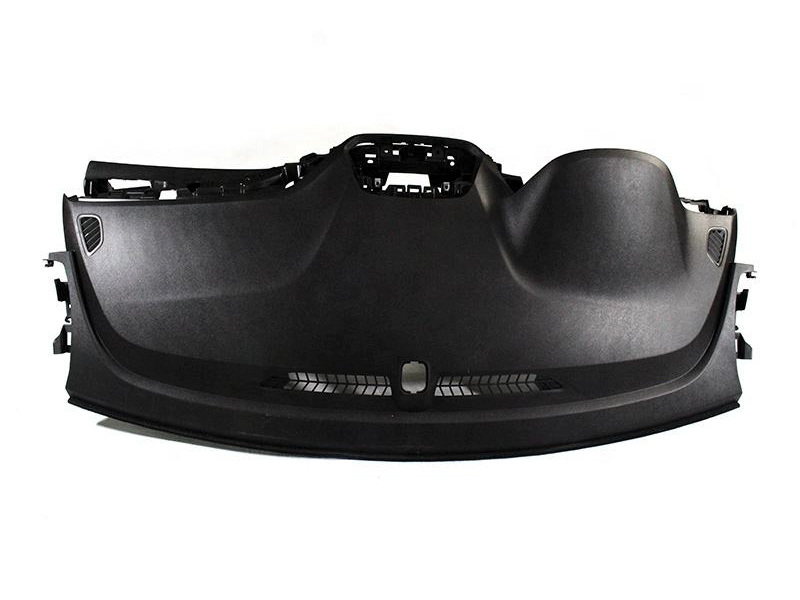
Picture a plastic interior trim panel with decorative surfaces, clips, mounting points, and openings. If those features are laid out without the molding process in mind, some areas may fill unevenly or resist release. The mold may then need extra moving sections or special structures.
A practical design asks whether complexity can be trimmed. Designers may ease certain curves, simplify awkward shapes, or move features so the part forms more easily. The point isn't to make every part plain. It is to remove complexity that adds no functional or visual value.
Geometry also affects fit. Automotive parts rarely stand alone. They connect with panels, fasteners, wiring, and supporting structures. A poorly placed feature can complicate assembly even when the part molds perfectly.
Typical geometry-related difficulties include:
- Deep features that make removal hard.
- Uneven wall sections that cool inconsistently or warp.
- Sharp transitions that create stress or forming defects.
- Complicated structures that demand extra mold movement.
- Badly positioned mounting features that slow assembly.
Reviewing geometry and mold structure together lets designers adjust for both function and practicality.
Simplifying Production Through Mold Structure
The internal structure of a mold governs how material enters, how the part takes shape, and how it is released. A complicated structure adds operations and makes maintenance harder.
Designers need the practical layout for forming the part. Opening direction, parting surfaces, internal structures, and release mechanisms should work as a team. Unnecessary movement or hard-to-reach areas mean extra work for operators.
A simpler structure is easier to run. Fewer complicated actions reduce the chance of operating errors and make the process easier for production teams to understand. Inspection and upkeep get lighter too.
Simplifying doesn't mean stripping out every extra mechanism. Some parts truly need complex molds. The aim is for each structural element to earn its place.
Take an automotive housing with several side openings. Depending on the design, those openings may require added mold mechanisms. If some can be moved or reworked without hurting the housing's function, the mold becomes easier to build and operate.
A thoughtful layout also gives better access to areas that need cleaning, inspection, or repair. That counts for a lot when molds run repeatedly and maintenance can't be allowed to disrupt output.
Material Flow and Defect Reduction
Material behavior is a major factor. During production, material must flow into the mold, fill every intended space, and form the shape. If the design doesn't support that, expect incomplete filling, surface defects, uneven formation, and other quality problems.
Where material enters and how it travels through the mold shape the result. Poorly planned flow leaves areas the material struggles to reach, while other sections see uneven pressure or buildup. Production becomes less consistent.
Designers can study the part's shape to decide where material should enter and how it should move. Entry point position, channel shape, and surrounding structures all influence forming.
For complex parts, design reviews help locate areas where flow may get difficult. Changes to part geometry or mold layout can improve how material reaches each section.
Materials differ, too. Some flow easily. Others need more careful forming conditions. A mold built around one material may behave differently with another.
That is why material choice and mold design belong in the same conversation. Considering both during development cuts avoidable adjustments and steadies production.
Cooling and Part Quality
Cooling is a key step in many automotive molding processes. Once material takes shape, it has to cool or stabilize before release. Uneven cooling can cause dimensional shifts, bending, surface flaws, and other defects.
Automotive parts mix wall thicknesses and structural features. Some areas hold heat longer than others. A mold that ignores those differences produces uneven cooling and inconsistent quality.
Cooling layout should follow the part's shape. Designers need to think about how heat moves through different areas and whether the cooling structure can reach the sections that need it. It should also stay practical for building, inspection, and upkeep.
A single part may have thick mounting areas, thin decorative surfaces, and reinforcing ribs. Each responds differently. A design that accounts for this reduces deformation and makes results more predictable.
Cooling also drives efficiency. If a part needs too long to stabilize, cycles stretch out. If it is released too soon, it may deform or need extra handling. Good design strikes a better balance between quality and speed.
So the cooling structure should be reviewed during mold development, not fixed after trial production. Planning it early avoids changes and eases the move into regular production.
Easier Part Removal and Assembly
A part can form perfectly and still cause trouble coming out. Deep recesses, complex surfaces, narrow spaces, and features that grip the mold make release difficult.
When removal isn't considered, parts get scratched, bent, or cracked. Operators may need extra manual work to take them out safely, which slows production and invites inconsistent handling.
Mold design handles this through suitable release directions, surface arrangements, and removal mechanisms. The part shouldn't depend on excessive force to come free.
Where release mechanisms sit also matters. If they act on weak or visible areas, they can leave marks or hurt appearance. Their placement should respect the part's function and surface needs.
Assembly deserves the same attention. Automotive parts carry clips, holes, mounting points, and connecting structures. If these can't be produced consistently, assembly teams struggle to fit parts together.
Mold design supports accurate feature formation and cuts needless variation. Considering mounting points and connecting areas during development makes the finished parts easier to join to their neighbors.
This link between molding and assembly is especially important for interior panels, exterior trim, housings, and any component that must line up with several adjacent parts.
Designing With Maintenance in Mind
A mold isn't used once and forgotten. It gets opened, cleaned, inspected, repaired, and adjusted again and again over its life. If upkeep is ignored in design, routine jobs become needlessly complicated.
Some structures have narrow spaces, hidden surfaces, or parts that are hard to reach. These spots collect residue, wear, or need frequent checks. With limited access, technicians spend extra time taking the mold apart for ordinary tasks.
Designing for maintenance means thinking about how technicians reach key areas. Replaceable components, accessible fasteners, and sensible inspection points make routine work easier. Worn sections should be repairable or replaceable without disturbing unrelated parts where possible.
That helps cut downtime. When maintenance is easy, teams can fix problems before they grow into bigger interruptions, and operators can notice wear that might affect part quality.
Upkeep and production stability go hand in hand. A mold that does well in early trials can still run into trouble after heavy use, and design choices that support inspection and repair help manufacturers deal with that.
Maintenance-friendly design also improves communication between mold engineers, workshop technicians, and operators. A structure that is easier to understand is easier to service day to day.
Testing and Design Review
Mold testing is a key stage in development. It shows how the mold performs under real production conditions and lets teams compare the parts with the intended design.
Testing reveals problems that design review alone can miss, such as deformation, incomplete formation, surface marks, difficult release, or assembly inconsistencies. These findings show engineers where to focus.
A structured review before the mold is built reduces what turns up in testing. Testing still matters, because it confirms whether the design works in practice.
The review should cover:
- Whether the part can be formed as intended.
- Whether material movement supports the required shape.
- Whether the part can be removed without damage.
- Whether cooling and stabilization are reasonably consistent.
- Whether mounting and connecting features meet assembly needs.
- Whether the mold can be inspected and maintained conveniently.
Communication counts at this stage. Mold designers, manufacturing teams, quality staff, and product engineers should share observations instead of treating testing as a separate chore. A trial problem may trace back to mold structure, part geometry, material choice, or production conditions.
When feedback is recorded and evaluated systematically, changes are made with a clear purpose. Engineers can judge whether an adjustment is necessary, check its effect on other mold sections, and avoid creating new problems while fixing old ones. Testing then becomes a real part of development rather than a string of disconnected fixes.
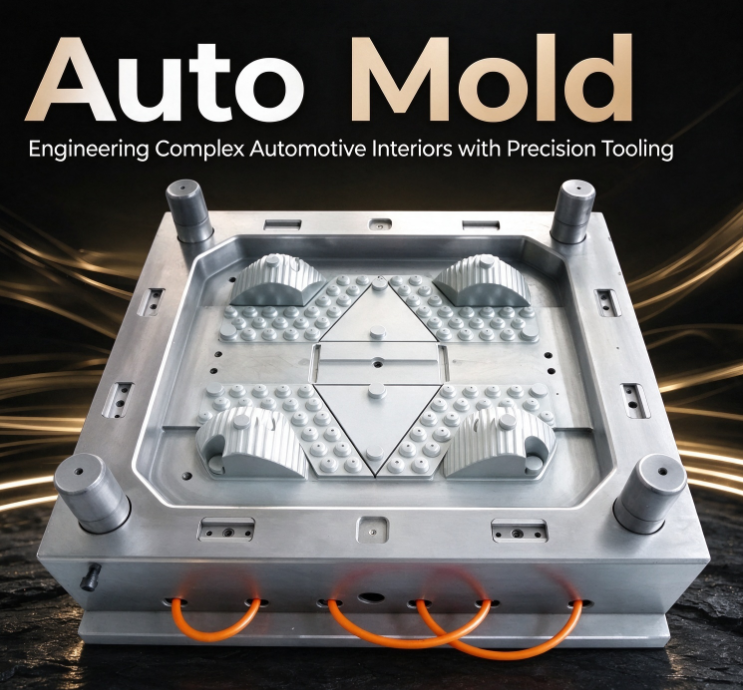
Auto Mold design touches the whole manufacturing process. Decisions made early affect how easily a part is formed, removed, inspected, assembled, and produced again and again. Weighing these needs together helps manufacturers avoid unnecessary difficulty and build molds that work well in daily use.