 Search...
 English
How Does Venting Affect Plastic Flower Pot Mould Quality
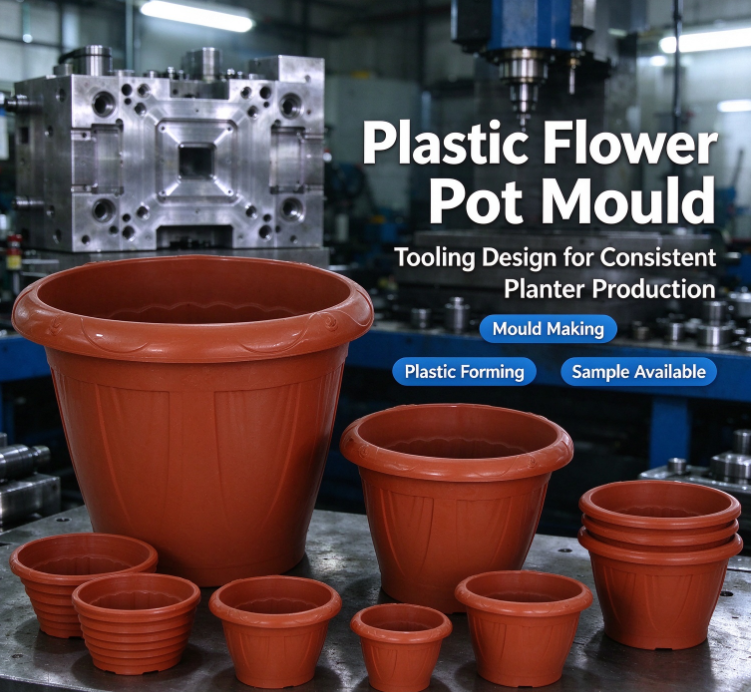
Plastic flower pots are used in gardens, nurseries, homes, landscaping projects and commercial plant production. Their shapes look simple, yet producing a consistent pot takes careful control of the injection molding process. The mould has to let molten plastic fill the cavity, take the intended shape and cool before the finished product comes out.
One detail is easy to overlook: venting. During injection molding, the air inside the cavity needs a way out as molten plastic enters. If the air gets trapped, it interferes with filling, harms the pot's surface and creates defects that later processing can't easily fix.
For plastic flower pot mould manufacturers, venting ties closely to mould design, product appearance, production stability and maintenance. Its importance grows when a pot has narrow features, decorative patterns, deep shapes or areas where plastic flow blocks the movement of air.
Understanding how venting works helps manufacturers spot problems earlier. It also supports better decisions when designing, testing or maintaining a flower pot mould.
1. Why Is Venting Important in a Plastic Flower Pot Mould?
During injection molding, molten plastic enters the mould cavity and gradually fills the available space. The cavity holds air before filling begins. As the plastic moves forward, that air has to leave through suitable escape paths.
Venting provides those paths. Displaced air and other gases move out of the cavity instead of staying trapped between the incoming plastic and the mould surface.
Without suitable venting, air gets compressed in certain areas. That resists the plastic's movement and stops the cavity from filling as intended. Sometimes the trapped gas even gets hot enough to damage the plastic surface.
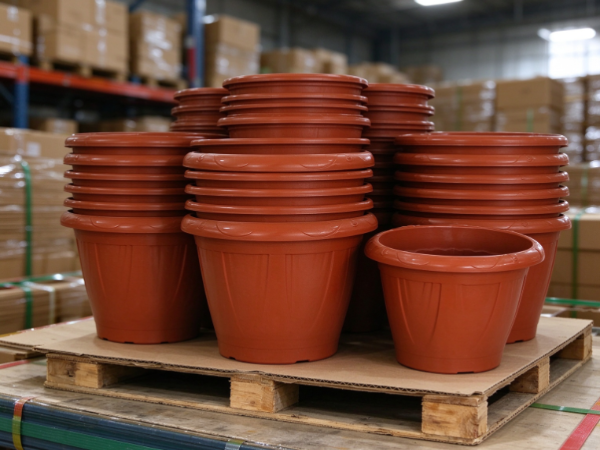
The effect isn't limited to one defect. Poor venting contributes to incomplete filling, dark marks, rough surfaces, weak areas and inconsistent appearance. These issues often show up only in specific parts of a flower pot, which makes them hard to catch during routine inspection.
Picture a pot with a textured outer wall and a narrow rim. The plastic flows around the decorative features and meets near the rim or another restricted area. If air can't escape from that region, the part shows visible marks or an incomplete shape, even when the rest of the pot looks fine.
Venting also affects production stability. A mould that fills inconsistently needs repeated adjustments to processing conditions. Those adjustments eat production time and leave the underlying cause untouched.
That's why venting belongs in mould development from the start. Treating it only as a fix when defects appear is the weaker approach. A well-planned venting arrangement helps the mould fill more consistently and supports repeatable manufacturing.
2. How Does Poor Venting Affect the Appearance of Plastic Flower Pots?
Appearance matters for many plastic flower pots. Products for retail gardening, home decoration and commercial planting often feature smooth surfaces, decorative textures, colored finishes or clearly defined edges. Defects change how the finished pot looks and how closely it matches the intended design.
Poor venting creates several types of surface problems.
Burn marks are a common concern. When air gets trapped and compressed as plastic enters the cavity, the resulting heat leaves dark or discolored areas on the molded part. These marks tend to appear near the end of the filling path or around features that restrict air movement.
Incomplete surface formation is another result. If trapped air keeps the plastic from reaching a particular area, a decorative feature looks shallow, uneven or missing. The same issue hits the rim, base, drainage features and other details.
Surface irregularities also occur. Certain areas look rough or show unwanted marks even though the mould surface has no obvious damage. In these cases, the culprit is often the movement of air during filling, not the condition of the mould finish.
These defects stand out most on pots with uniform colors or repeated decorative patterns. A small mark on one product is easy to miss. Repeated differences across a production batch make the overall appearance inconsistent.
Separate venting problems from other causes of surface defects. Plastic material condition, mould temperature, filling behavior and surface contamination also affect appearance. Changing the venting arrangement without finding the real cause won't solve the problem.
Manufacturers should examine where the defects occur and whether they follow a repeated pattern. Marks that keep appearing near the end of the filling path, or around areas where air gets trapped, offer useful clues.
3. Can Venting Problems Cause Incomplete Filling and Shape Defects?
A plastic flower pot needs a complete shape to do its job. The sidewall, rim, base, drainage openings and connecting features all have to form correctly. When air can't escape from the cavity, the plastic struggles to reach some of these areas.
This problem is called incomplete filling. Part of the mould cavity stays unfilled, leaving the product with a missing edge, an incomplete detail or a section that doesn't match the design.
The defect's location helps explain what's happening. If the same part of the pot stays incomplete across repeated molding cycles, the issue likely involves how plastic and air move through that area.
A pot with a deep cavity, for example, creates a longer path for the incoming plastic. As the material moves through the mould, air gets trapped in a region that fills late. With no effective escape route, the plastic stops short of the intended boundary.
Thin walls and narrow decorative features add further challenges. Plastic must reach these areas while the air ahead of it moves away. If venting is inadequate, the mould can't reproduce the designed shape consistently.
Poor venting also contributes to uneven formation in areas that look filled but lack the intended structure. The visible surface looks acceptable from one angle, while a closer look reveals a poorly formed edge or an irregular transition between features.
Incomplete filling doesn't automatically point to venting, though. Material flow, processing conditions, gate location and mould design also affect how completely the cavity fills.
A useful inspection process compares the defect location with the expected plastic flow path. Manufacturers can then judge whether the problem is more likely trapped air, restricted material flow or a mix of factors.
4. How Does Venting Influence the Strength and Consistency of Molded Pots?
Plastic flower pots must withstand routine handling, planting, movement and storage. Depending on the intended use, they also face pressure from soil, contact with other containers or repeated stacking.
Venting doesn't set a finished pot's mechanical properties on its own. Material selection, wall design, cooling and molding conditions all play important roles. Still, trapped air and gas-related defects affect the integrity and consistency of the molded part.
When air interferes with filling, the plastic doesn't form the intended structure in every region. Thin or incomplete sections create weak points, especially around edges, corners and narrow features. These areas are more vulnerable to cracking or deformation during handling.
Gas-related surface damage also signals that the molding process isn't behaving as intended. Even when a defect looks cosmetic, it's worth checking whether the surrounding area formed properly.
Consistency matters as much as the condition of any single pot. If some products fill correctly while others show incomplete features or localized damage, manufacturers face more inspection work and higher rejection rates.
That variation spills into downstream operations. Pots need sorting, rework where possible, or removal from the batch. If the problem continues, packing and delivery schedules suffer.
Venting supports more stable filling when it's designed around the product's shape and the way plastic enters the cavity. Evaluate it together with other mould features. It isn't a standalone solution.
For manufacturers, the practical goal is pots that match the intended design from one cycle to the next. Reviewing venting during mould trials helps identify areas that need attention before routine production starts.
5. Where Should Venting Be Considered During Plastic Flower Pot Mould Design?
Plan venting around the movement of air inside the mould cavity. Its location depends on the pot's geometry, the direction of plastic flow, the cavity layout and the areas that fill near the end of injection.
No single venting arrangement suits every plastic flower pot mould. A simple pot with a fairly open shape presents different challenges from a pot with a deep profile, decorative ribs or a complex base.
Several areas deserve attention during design and testing:
- End-of-fill regions: Air collects where the plastic reaches the cavity last. These locations matter most when reviewing potential trapped-air defects.
- Rim and edge features: Narrow sections restrict air movement and need careful evaluation.
- Decorative patterns: Raised details, grooves and textured surfaces change how plastic flows around the cavity.
- Base and drainage features: The shape of the bottom section influences where air gets trapped during filling.
- Deep or recessed areas: Areas that are hard to fill are often hard to vent, depending on the mould layout.
Vents must let air escape without letting unwanted amounts of molten plastic through. If a vent doesn't suit the material and mould design, it creates flash or calls for extra finishing work.
The mould designer also has to think about how venting will be maintained. Vent paths that are hard to inspect or clean lose effectiveness during production. Their location should allow practical access for routine maintenance.
Simulation, design reviews and mould trials help teams find likely air-trapping locations. Actual molding tests stay important, because material behavior differs from initial expectations.
A useful design review asks more than whether venting exists. It also asks whether the chosen locations match the expected filling pattern and the product's most sensitive features.
6. What Is the Relationship Between Venting, Mould Maintenance, and Production Stability?
Even a plastic flower pot mould designed with suitable venting changes in performance during use. Plastic residue, dust, deposits and other contaminants gradually restrict the paths air escapes through.
As these paths clog, air starts to accumulate in areas that used to fill correctly. Surface marks, incomplete details or changes in filling behavior then appear in production.
That's why venting belongs in routine mould maintenance. Cleaning and inspection preserve the intended escape paths and make it easier to spot changes before they affect many products.
Follow the mould manufacturer's instructions for maintenance. Vent areas are delicate, and aggressive cleaning or unsuitable tools damage their surfaces or alter their shape. Uncontrolled modifications create new problems instead of solving old ones.
A practical maintenance process includes:
- Checking vent areas for visible deposits or blockage.
- Inspecting the mould surface around recurring defect locations.
- Cleaning vent paths using approved methods.
- Recording repeated defects and the actions taken.
- Reviewing vent condition when a previously stable mould starts producing inconsistent parts.
Production records help teams link defects to maintenance history. If a surface mark returns after extended production, a vent blockage is worth investigating. If the defect survives cleaning, the cause lies in mould design, processing conditions or another part of the system.
Maintenance also improves communication between operators, technicians and mould designers. When workers record where defects occur and how they change after cleaning, that information guides future inspections and design improvements.
Treat venting as a working part of the mould. It needs attention beyond initial manufacturing.
7. How Can Manufacturers Identify and Correct Venting-Related Defects?
Identifying a venting problem takes more than looking at the finished pot. Manufacturers compare the defect pattern with the molding process and weigh other possible causes.
A structured investigation cuts unnecessary adjustments and keeps the team focused on the area most likely responsible.
Examine the defect location. Repeated marks near the end of the filling path, around recessed details or in similar areas across different pots suggest trapped air. The location is a clue, not definitive proof.
Review the filling pattern. The way plastic moves through the cavity explains where air collects. Mould drawings and observations from production trials support this review.
Inspect the vent paths. Deposits, damage or blockage reduce the mould's ability to release air. Follow approved procedures during inspection so the vent geometry stays unchanged.
Check other process factors. Material condition, injection behavior, mould temperature and the overall filling sequence also produce defects. Review these before making changes.
Test corrective actions carefully. If a venting issue turns up, qualified personnel make the adjustments. The team then checks whether the change resolves the defect without creating flash, surface damage or other problems.
Record the result of each adjustment. Changing several factors at once makes it hard to tell which action worked. A controlled approach helps manufacturers understand the cause and hold on to the improvement.
When the same defect keeps returning, the original mould design needs a second look. Vent locations, the filling path and the product geometry should be considered together.
Not every air-related defect yields to vent cleaning or minor adjustments. Some cases demand changes to the mould structure or a broader review of the molding process.
8. What Should Buyers Check When Evaluating a Plastic Flower Pot Mould?
For buyers, venting is worth discussing before a plastic flower pot mould enters routine production. It isn't obvious from the outside of a finished mould, yet its design affects filling behavior, product appearance and the ease of ongoing maintenance.
A mould supplier should be able to explain how venting was considered in relation to the pot's shape and manufacturing process. Buyers don't need to review every design detail, but they should understand how the supplier plans to manage trapped air and check the result during trials.
The questions below guide discussions with a mould supplier:
| Evaluation Area | Questions for the Supplier |
|---|---|
| Product design | Have potential air-trapping areas been considered in the pot's geometry? |
| Venting layout | How were vent locations selected for the expected filling pattern? |
| Surface appearance | How will the mould be checked for burn marks and other air-related defects? |
| Filling quality | How will incomplete filling be identified during mould trials? |
| Maintenance access | Can the vent paths be inspected and cleaned during routine service? |
| Trial evaluation | Will the supplier review defect locations and make necessary adjustments? |
| Production consistency | How will the mould be assessed across repeated molding cycles? |
| Documentation | Are inspection, cleaning, and maintenance instructions available? |
Buyers should also look at how venting relates to other mould features. Gate placement, cooling design, cavity structure and the shape of the pot all influence mould performance. Evaluating venting in isolation misses issues elsewhere in the system.
During mould acceptance, inspect both appearance and product formation. A pot looks fine on the outside and still has incomplete features or inconsistencies that surface during handling or use.
Clear communication about product requirements matters just as much. Buyers should explain the intended application, appearance expectations, material preferences and production method. That helps the supplier assess venting as part of the full mould design.
Judge a plastic flower pot mould by more than whether it produces a part. Look at how consistently it forms the required shape, how easily it's maintained and how well it fits the manufacturer's production process.