



 Search...
 English
How To Choose The Best Laundry Basket Mould For Durable Household Use
Why Does Laundry Basket Choice Affect Daily Household Efficiency?
Laundry baskets usually sit in the background of home routines, yet they get handled more often than expected. Clothes move from bedroom to bathroom, then from washing area back to living space, sometimes several times in a single day. That repeated movement quietly tests the structure of the basket.
A weak design starts showing signs early. Slight bending near the rim. Handles feeling loose under load. Base shifting when placed on uneven floors. None of these appear dramatic, though they slowly affect daily convenience.
Laundry Basket Mould plays a deeper role than surface shape. The mould decides how weight spreads across the basket body, where pressure concentrates, and how the structure reacts when filled unevenly. Even a small change in mould cavity balance can influence long-term comfort during carrying.
Household use rarely follows a fixed pattern. One day the basket carries light clothes, another day wet towels or heavier bedding. That variation makes structural stability more important than appearance alone.
What Materials Are Suitable For Durable Laundry Basket Production?
Material choice decides how a basket behaves under pressure, especially during repeated lifting and storage. In mould production, two plastic types are commonly used for household laundry baskets.
Polypropylene in daily use behavior
Polypropylene stays flexible under load. When filled with clothes, it bends slightly instead of cracking. That small flexibility helps reduce sudden breakage at stress points. During mould shaping, material flow stays relatively smooth, allowing stable cavity filling.
High-density polyethylene in structure stability
High-density polyethylene feels stiffer. It holds shape well in cooler or warmer indoor environments. In storage situations where baskets stay loaded for longer time, that stiffness helps maintain form.
Material influence on mould behavior
Material choice affects how Laundry Basket Mould performs during injection:
- Flow speed inside cavity
- Cooling time after forming
- Thickness consistency across walls
- Stress distribution near corners
Different materials respond differently inside the same mould. A structure designed for flexible material may behave differently when switching to a stiffer one.
Why Does Wall Thickness And Reinforcement Matter?
Thin basket walls may look neat, yet under real household use, pressure does not distribute evenly. Clothes gather in the center, handles carry uneven force, and base corners often take repeated contact with the floor.
Thin structure behavior
Ultra-thin plastic tends to flex too much under heavy load. Over time, handle areas start losing shape, and base sections may warp slightly when weight is uneven.
Reinforced rim function
A reinforced rim helps distribute pulling force when lifting the basket. Instead of stress focusing on one point, pressure spreads along the rim line. In mould design, this requires careful cavity shaping to maintain uniform thickness.
Ribbed side wall support
Rib structures inside basket walls act like hidden supports. They do not change external appearance much, yet they reduce bending during heavy loading.
Small structural changes in mould design often decide whether a basket feels stable or fragile in daily use.
How Does Laundry Basket Mould Control Final Product Shape?
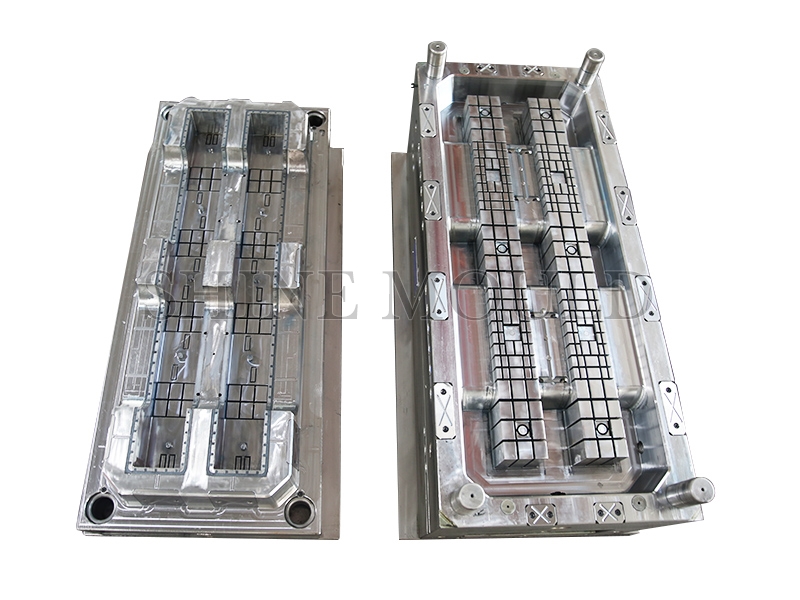
Inside production, mould cavity design decides everything from basic shape to subtle structural behavior. A laundry basket is not just formed; it is guided through controlled material flow and cooling stages.
Cavity shaping influence
The cavity defines outer form and internal balance. Slight differences in depth or angle may change how weight spreads across the structure after cooling.
Material flow behavior
Molten material does not always enter evenly. It moves faster in some paths and slower in others. If flow control is weak, thicker zones and thin zones appear in different areas of the basket.
| Mould Design Factor | Household Effect | Long-Term Behavior |
|---|---|---|
| Wall thickness balance | Stable carrying feel | Reduced deformation |
| Rib placement | Less bending under load | Longer shape retention |
| Rim reinforcement | Safer lifting | Lower handle stress |
| Cooling balance | Smooth surface finish | Stable basket form |
Why Is Ventilation Important In Household Laundry Baskets?
Laundry often contains moisture. Wet towels, gym clothes, or damp fabric may stay inside the basket for some time before washing. Without airflow, moisture becomes trapped.
Lack of ventilation behavior
When air does not move freely, odor may build up inside the basket. Dampness remains longer, especially in closed or warm rooms.
Mesh structure design
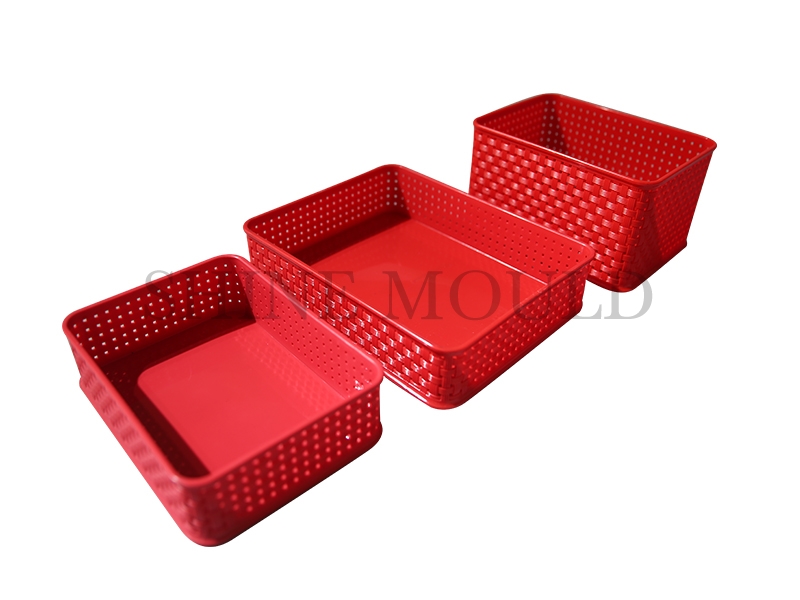
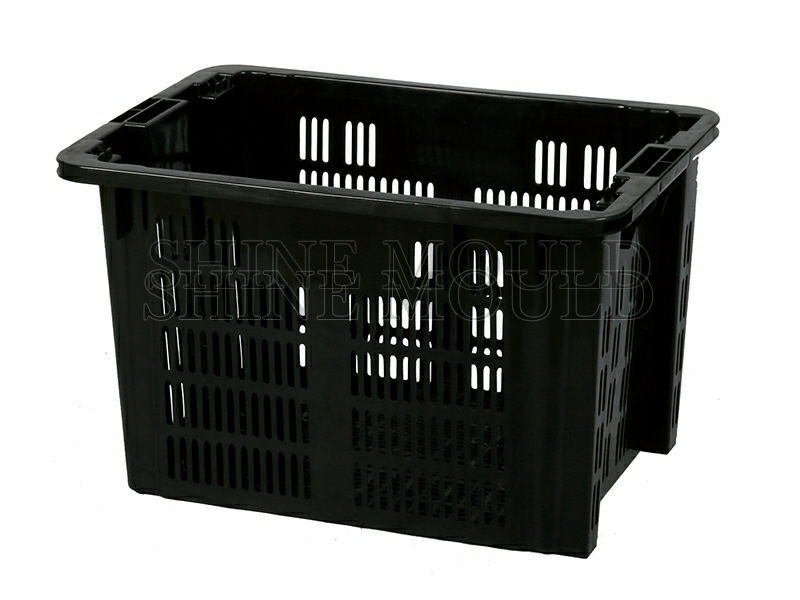
Ventilation is usually created through patterned openings or cut-out shapes. In mould production, those patterns require precise cavity shaping to keep strength balanced with airflow.
Balance between structure and airflow
Too many openings may weaken structure. Too few reduce ventilation. Mould design needs to balance both sides carefully so airflow exists without losing stability.
How Do Handles And Ergonomics Influence Daily Carrying?
Handles decide how comfortable a basket feels during daily movement. Even when the basket structure is strong, poor handle design can make carrying tiring.
Load pressure on hands
When a basket is full, pressure concentrates around handle edges. Hard or sharp edges may cause discomfort during longer carrying distance.
Hip-hold structure idea
Some basket shapes include a curved side that rests against the body. This allows one-hand carrying while the other hand remains free. It reduces strain during repeated movement between rooms.
Why Does Basket Mould Factory Matter In Production Stability?
A Basket Mould Factory is not only responsible for shaping tools, it also influences how stable the final product becomes during long-term production.
Design adjustment during development
Small changes often happen during early mould shaping. Wall thickness, rim support, or handle position may be adjusted after testing real usage behavior.
Production consistency importance
Even slight variation in mould alignment can affect multiple production cycles. Once inconsistency appears, baskets may show small differences in shape or stiffness.
Long-term mould behavior
Moulds experience repeated heating and cooling. Over time, structure stability inside the mould affects output consistency.
How Does Production Process Affect Long-Term Durability?
Laundry basket production runs in repeated cycles. Plastic melts, enters the mould, takes shape, then cools down before the next round begins. On paper it looks simple. In practice, small shifts during each cycle slowly shape how strong the final basket becomes.
Cooling differences
Cooling never happens at the same speed everywhere. Rim areas, base corners, and handle zones release heat in their own way. A basket that cools unevenly may still look normal, though internal tension stays inside the structure.
Long cycle effect
After many repeated cycles, mould surfaces slowly change. Tiny wear marks can affect how plastic flows. The change is gradual, not sudden, so it often shows up only when product consistency starts to feel slightly different from earlier batches.
What Problems Commonly Appear During Laundry Basket Moulding?
In daily production, a few patterns appear again and again. They usually come from flow imbalance or cooling mismatch rather than design intention.
Surface flow traces
When plastic moves unevenly inside the cavity, faint lines may appear on the surface. They do not usually affect basic use, though they hint at internal flow differences.
Handle weak spots
Handles carry repeated pulling force. If reinforcement inside the mould is not balanced, small bending or stress marks can show up after frequent lifting.
Base shape shift
Flat base areas sometimes cool slightly unevenly. Over time, a light curve or uneven touch may appear when placed on hard ground.
Slight size variation
Across long production runs, minor differences may appear between batches. Not obvious, just enough to notice when stacking or comparing baskets side by side.
How Does Household Environment Influence Basket Design Requirements?
Laundry baskets live in everyday corners of the home. They move between rooms and storage spots without much attention, yet each space puts different pressure on structure and usability.
Tight storage areas
In small rooms, baskets often sit close to walls or under furniture. Shape needs to stay simple enough for easy placement without wasting space.
Humid laundry corners
Bathrooms or washing zones often stay damp. Airflow inside the basket helps reduce trapped moisture after wet clothes are placed inside.
Frequent movement routes
A basket rarely stays in one place. It moves from bedroom to washing area and back again. That constant movement slowly tests handle comfort and balance.
Mixed storage situations
Sometimes baskets are not only for clothes. Towels, bedding, or small household items may also be stored inside. That flexible use changes how weight is distributed.
Why Is Structural Reinforcement Important For Long-Term Use?
A laundry basket rarely carries weight in a balanced way. Clothes pile to one side, wet items sit heavier than dry ones, and lifting is often done quickly without careful adjustment.
Rim stress during lifting
Hands pull upward from the rim. That edge takes repeated force, so reinforcement there helps reduce slow bending over time.
Internal rib support
Ribs inside the basket are not visible, yet they guide force through the structure. Without them, flat walls bend more easily under uneven load.
How Does Basket Mould Factory Support Customization Needs?
Different homes do not use baskets in the same way. Some people carry laundry across floors, others move it only within one room. Because of that, mould design often adjusts to usage habits rather than fixed standards.
Shape adjustment during development
Small changes in height, width, or rim shape often happen during early mould testing. Even slight adjustment can change how the basket feels in use.
Capacity variation
A larger basket needs stronger wall support. A smaller one focuses more on easy handling. Mould cavity size directly affects both structure and weight balance.
Handle positioning changes
Handle angle and height influence carrying comfort. Some designs aim for one-hand use, others for two-hand balance.
Production flexibility
Basket Mould Factory work often involves gradual tuning instead of complete redesign. Small corrections are more common than large changes.
How Does Surface Quality Influence Household Usability?
Surface condition affects daily use more than it seems. A smooth basket is easier to clean, while rough textures may collect dust or detergent residue over time.
Cleaning behavior
Smooth surfaces allow quick wiping. Dirt does not settle deeply, which helps during regular household cleaning routines.
Scratch development
Laundry baskets often touch floors, walls, or other storage items. Surface strength affects how visible marks become after repeated contact.
Everyday visual consistency
Even without focusing on appearance, uneven surfaces may feel less stable when placed among other storage items.
How Does Laundry Basket Mould Support Modern Household Needs?
Home storage habits continue to shift. Spaces become smaller, routines become more flexible, and storage items often need to handle multiple roles.
Flexible storage use
Laundry baskets are sometimes used for toys, towels, or general household items. Structure needs to handle mixed loading conditions.
Lightweight handling preference
Even when empty, baskets should not feel heavy. Material distribution inside the mould affects that basic handling comfort.
Storage space efficiency
Many baskets are placed in corners or stacked. Shape stability helps prevent deformation during storage.
Gradual design adjustment
Design changes usually happen step by step, based on how households actually use the basket rather than strict design rules.
How Do Design Choices Influence Long-Term Product Performance?
Long-term behavior depends on many small design decisions working together rather than one strong feature.
Shape stability from mould accuracy
Accurate cavity design keeps baskets consistent across repeated production, reducing random differences in structure.
Response to repeated loading
Household use repeats every day. Structure must handle constant pressure shifts without losing shape quickly.
Environmental influence over time
Humidity, temperature, and storage conditions slowly affect plastic behavior, especially in thinner sections.
Consistency across production cycles
Stable mould performance helps keep product behavior similar from one batch to another, which matters in daily household use.
Laundry baskets seem simple, yet their structure comes from many small decisions inside mould design and production control. Handle shape, wall thickness, airflow openings, and base balance all come from controlled forming rather than random shape.
Laundry Basket Mould and Basket Mould Factory work together in that background process. The result is not only a container for clothes, but a daily tool that quietly follows household movement, carrying weight, moisture, and repetition without drawing attention to itself.
-1.jpg)
.jpg)
