



 Search...
 English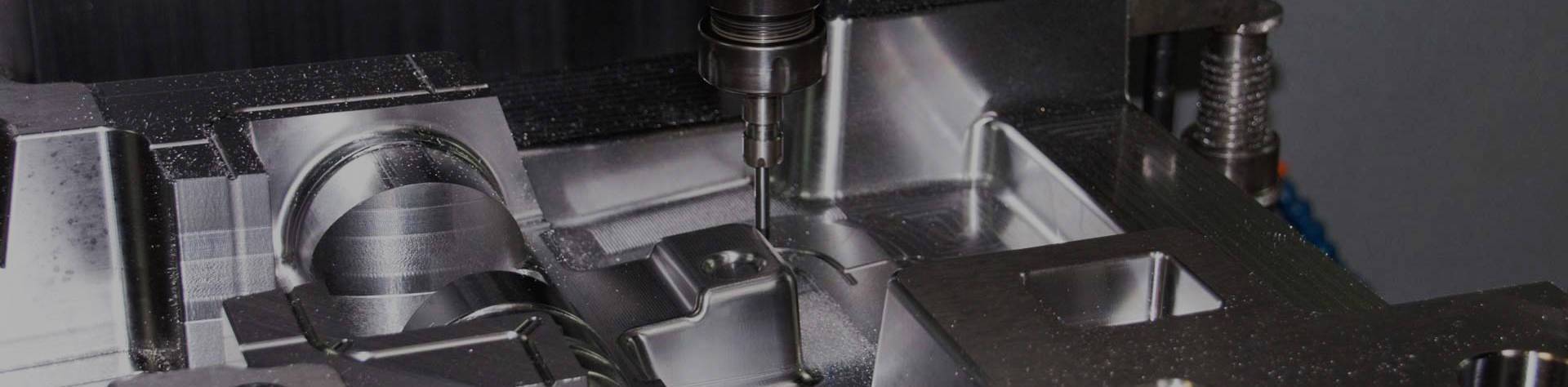
Surface Treatment and Demolding Performance for Basket Moulds
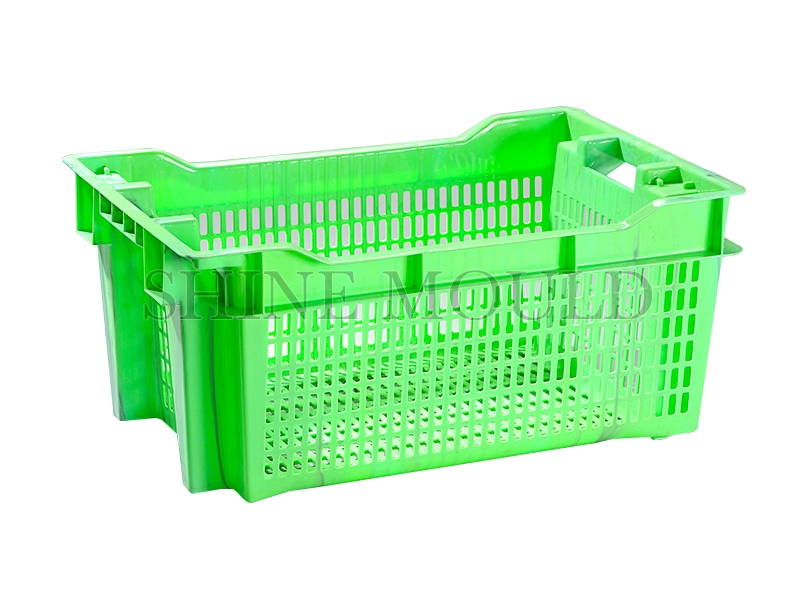
Basket moulds are widely used in plastic injection molding to produce storage baskets, crates, and household containers. In high-volume manufacturing, surface treatment and demolding performance are critical factors that directly affect product quality, cycle time, and mould lifespan. Poor surface finish or inadequate demolding design can cause scratches, sticking, deformation, or even damage to the mould itself. For this reason, optimizing surface treatment and demolding performance of a Basket Mould is an essential task for mould designers and manufacturers seeking stable, efficient, and cost-effective production.
Role of Surface Finish in Mold Performance
Surface finish plays a decisive role in how easily a molded basket can be released from the cavity. A smooth and well-polished surface reduces friction between the plastic part and the mould steel, reducing adhesion during cooling. Mirror polishing or fine mechanical polishing is often used for areas where appearance is important or where plastic shrinkage tends to increase resistance during ejection. In contrast, controlled texture finishes may be applied to external surfaces for aesthetic or anti-slip purposes, but these must be carefully designed to avoid increasing demolding resistance. Balancing visual requirements with functional performance is key when selecting surface finishing methods.
Common Surface Treatment Technologies
Several surface treatment technologies are used to enhance mould durability and demolding efficiency. Polishing remains the common method, improving smoothness and reducing plastic sticking. Chrome plating and nickel plating are also widely applied to increase hardness, corrosion resistance, and surface smoothness. In high-wear applications, surface coatings such as PVD or nitriding can significantly improve wear resistance while maintaining good release properties. These treatments help protect the mould surface from abrasion caused by repeated injection cycles and reinforced plastic materials.
Demolding Angle and Structural Design
Beyond surface treatment, structural design strongly influences demolding performance. Adequate draft angles allow molded baskets to separate smoothly from the cavity as the mold opens. Insufficient draft angles increase friction and may cause part deformation or sticking. For deep or complex basket structures, designers often increase draft angles slightly to compensate for shrinkage and surface texture. A well-designed Basket Mould combines appropriate draft angles with optimized rib layouts to ensure even stress distribution during ejection, reducing the risk of damage to both the product and the mould.
Ejection System Optimization
The ejection system is another critical factor in improving demolding performance. Uniformly distributed ejector pins, stripper plates, or air-assisted ejection systems help release the basket evenly without causing distortion. Surface treatment of ejector pins is also important, as polished or coated pins reduce friction and wear. Proper synchronization of ejection forces prevents localized stress concentration, which can otherwise cause cracking or surface marks on the product. A reliable ejection system complements surface treatment efforts and ensures smooth demolding in continuous production.
Material Selection and Its Impact on Demolding
The choice of plastic material affects both surface treatment requirements and demolding behavior. Materials such as polypropylene and polyethylene generally have good flow and release properties, while reinforced plastics or recycled materials may increase friction and wear. For these applications, enhanced surface treatments and optimized mould steel selection become more important. Understanding the interaction between material shrinkage, surface energy, and mould finish allows manufacturers to tailor treatments for specific production needs.
Maintenance and Long-Term Performance
Even the surface treatments require proper maintenance to remain effective. Regular cleaning removes residue and prevents surface contamination that can increase adhesion. Periodic inspection and re-polishing or re-coating help restore demolding performance and extend mould life. Preventive maintenance ensures that optimized surface treatments continue to deliver consistent results over thousands of production cycles.
.jpg)
