 Search...
 English
Which Materials Are Commonly Used for Plastic Crate Moulds
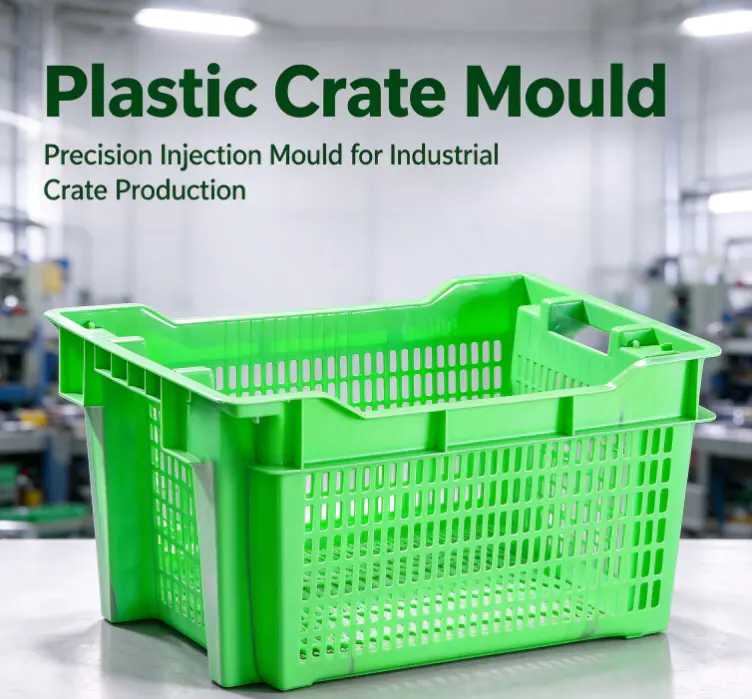
Plastic crates quietly do a lot of heavy lifting in storage, transport, retail, agriculture, industrial handling — moving goods between production sites, warehouses, stores, distribution centers day after day. Behind every one of these crates sits a mould shaping the plastic into its final form. What that mould's actually made of shapes its durability, maintenance needs, manufacturing process, and whether it can genuinely hold up to repeated production runs.
Picking a mould material isn't just a matter of grabbing the hardest metal on the shelf. Plastic crate mould have to survive repeated heating, cooling, pressure, mechanical movement — and still hold the crate's shape through all of it. Different materials bring different combinations of strength, wear resistance, machinability, corrosion resistance, cost to the table.

Steel's the go-to for plastic crate moulds in most cases, but not every project needs the same steel grade or mould construction. Aluminum alloys fit certain development or lower-volume jobs well; different steel grades cover a range of production needs beyond that. What actually works comes down to crate design, plastic material, production plan, surface requirements, and the maintenance routine the mould will see.
Getting familiar with these options helps mould designers, injection moulding companies, and purchasing teams make calls that genuinely fit their production needs.
Why Does Mould Material Matter in Plastic Crate Production?
A plastic crate mould has to hold its shape through endless repetition. During injection moulding, molten plastic flows into the cavity and takes on its form as it cools. The mould opens, the finished crate comes out, and the cycle just starts over again — thousands of times, often.
Every cycle puts real demands on the mould. The material has to withstand mechanical loads and constant temperature swings. Its surface needs to resist wear from plastic flow, contact with moving parts, routine cleaning. Pick an unsuitable material, and maintenance ramps up fast, with the mould struggling to hold consistent product quality over time.
Material choice also shapes how easily the mould gets manufactured in the first place. Some metals cut, drill, polish, or repair more easily than others. A material prized for high strength often demands more aggressive machining to work with. Something easier to process might turn out less suited to long production runs down the line.
Raw material cost is really just one slice of the decision. Machining, heat treatment, surface finishing, maintenance, expected service life — all of this factors into the real investment. A cheaper purchase price doesn't necessarily mean lower long-term cost if the mould ends up needing frequent repairs.
Plastic crates themselves vary a lot in design too. Some have open structures with wide gaps between ribs; others lean on reinforced corners, textured surfaces, reinforced bases, or features letting them stack or nest cleanly. These differences shape the loads the mould carries and how much detail the manufacturing process actually demands.
A suitable mould material, then, really needs to match the actual production task at hand — not follow some one-size-fits-all rule across every crate design.
Which Steel Materials Are Commonly Used for Plastic Crate Moulds?
Steel's the common pick for plastic crate moulds because it brings a genuinely useful mix of strength, wear resistance, and suitability for repeated production. But "mould steel" isn't one uniform material — different grades carry different properties, and what fits comes down to design and working conditions.
Pre-hardened mould steel
Pre-hardened steel arrives in a condition that lets a lot of mould components get machined without needing a separate hardening step afterward. That simplifies production planning quite a bit and cuts down on certain additional treatments nobody wants to deal with.
It fits well for moulds where the needed combination of strength, machinability, and surface quality can be hit in the supplied condition as-is. What actually gets chosen still depends on expected production volume, mould geometry, and wear requirements specific to the job.
Hardenable tool steel
Some moulds need steel that can undergo heat treatment to reach the required hardness and wear resistance. Hardenable tool steels fit well when mould surfaces or components have to survive genuinely demanding production conditions.
Heat treatment needs tight control, though. Mismanage it, and the steel can warp or build up internal stresses nobody wants. Mould makers need to plan for these effects right from the design and machining stage, not discover them after the fact.
Corrosion-resistant mould steel
Certain plastics, processing conditions, or storage environments carry a higher risk of corrosion. In these cases, corrosion-resistant mould steel is genuinely worth considering.
Whether it's actually needed depends on the plastic being processed, the surrounding environment, cleaning practices, and the maintenance routine in place. Corrosion resistance helps protect mould surfaces, sure, but it doesn't erase the need for proper ongoing care.
These steel categories aren't interchangeable, worth stressing. A mould maker should weigh the properties needed in each section of the mould — cavity, core, other working components — and pick the grade based on actual design and intended production conditions, not habit.
Can Aluminum Alloys Be Used for Plastic Crate Moulds?
Aluminum alloys genuinely work in some mould-making applications. They're lighter than steel generally and often easier to machine — qualities that matter a lot when a project needs fast tooling development, easier handling, or a mould built for limited production runs.
That lighter weight makes mould components easier to move and handle during certain manufacturing and maintenance tasks. Aluminum's machining characteristics can also shorten the tool-making process, depending on the mould design and equipment on hand.
That said, aluminum and steel behave quite differently under repeated production loads. Aluminum alloys generally run lower on hardness and wear resistance than suitable mould steels — a real limitation in applications facing heavy abrasion or demanding a long production life.
The decision really needs to weigh the intended plastic, crate structure, moulding conditions, and expected number of production cycles together. Large crates with extensive ribs or complex features put different demands on a mould than simpler products do.
Aluminum's genuinely worth evaluating for prototype tooling, product development, or select lower-volume projects. It shouldn't get treated as an automatic stand-in for steel in demanding production environments, though — that's where it tends to fall short.
The complete mould design matters here too. Cooling channels, cavity geometry, moving components, how the mould gets mounted — all of this affects how well the material actually performs. A real material comparison needs to look at the overall tooling arrangement, not just fixate on weight or machining speed alone.
How Do Different Mould Materials Compare?
What's actually suitable comes down to balancing production demands, manufacturing cost, maintenance, and expected service life. Here's a general comparison of common choices.
| Material category | Common characteristics | Potential applications | Main considerations |
|---|---|---|---|
| Pre-hardened mould steel | Combines useful strength with machining convenience | General-purpose moulds where its properties meet production needs | Grade suitability and surface requirements |
| Hardenable tool steel | Can be heat-treated to achieve required hardness and wear resistance | Moulds with demanding wear or strength requirements | Heat-treatment control and machining complexity |
| Corrosion-resistant mould steel | Offers greater resistance to corrosion than conventional mould steels | Applications where corrosion protection is important | Material cost, maintenance, and actual exposure conditions |
| Aluminum alloy | Lightweight and often easier to machine | Prototypes and selected limited-production applications | Wear resistance and long-term durability |
Treat this as a starting point rather than a final answer. Materials within the same category vary a lot, and real performance comes down to the specific grade and manufacturing process chosen.
A mould with a fairly simple cavity, for instance, has different material needs than one with detailed textures, thin ribs, or complicated moving parts. Same goes for a mould used occasionally for sampling versus one running continuously in a high-output injection moulding operation — totally different demands.
Mould makers and buyers really should review the complete application before deciding anything. That keeps a material from getting picked for one attractive trait while other real requirements slip through unnoticed.
How Does the Plastic Material Affect Mould Material Selection?
The plastic going into a crate plays a real role in mould material selection. Different plastics flow differently, process under different conditions, shrink differently, and affect mould surfaces in their own ways.
Polypropylene and high-density polyethylene are the usual picks for plastic crates. Both suit a wide range of storage and transport jobs, but how they actually behave during moulding depends on formulation and processing conditions specific to the batch.
The mould needs to accommodate how the plastic enters the cavity, fills out the crate structure, and cools down. Thin walls, reinforcing ribs, corners, handle openings all complicate filling and cooling in their own ways. The mould material needs to hold the required cavity shape through cycle after cycle without drifting.
Some plastic formulations carry fillers or reinforcing materials that chew through mould surfaces faster than plain resin would. In these cases, the mould maker needs to pay closer attention to wear resistance on the components that'll feel it most. Worth checking for additives directly rather than assuming all plastics create the same wear conditions — they really don't.
The plastic can shift surface requirements too. A crate built for general storage has different appearance needs than one headed for retail displays or consumer-facing use. The mould surface needs to match the desired finish, whether that's a relatively smooth look or a deliberate texture built in on purpose.
Buyers should share accurate details about the intended plastic with the mould manufacturer upfront. If the resin might shift down the road, that's worth flagging before the mould design gets finalized too — a change in resin or formulation can mess with processing and sometimes forces a review of existing tooling.
What Role Do Heat Treatment and Surface Finishing Play?
A mould's performance comes down to more than just the base material — how it's processed matters just as much. Heat treatment and surface finishing shape the properties of mould components and whether they genuinely hold up to repeated production.
Heat treatment gets used with certain steels to dial in hardness and other mechanical properties. What process is actually needed depends on the steel grade and the application. Get it wrong, and you're looking at distortion, cracking, uneven properties across the piece — so it needs real planning as part of the mould-making process, not an afterthought bolted on at the end.
Timing matters a lot here too. Mould makers need to figure out which machining operations should happen before treatment and which finishing steps belong after it. That helps manage dimensional shifts and keep the required cavity geometry intact through the whole process.
Surface finishing serves several purposes at once. It shapes the final appearance on the plastic crate, supports clean release of the finished part, and smooths out surface irregularities that would otherwise show up in the product. The right finish depends entirely on the product design — a textured crate surface needs different treatment than a smooth one.
Surface treatments or coatings sometimes make sense for select mould components too. Whether they're worth it depends on the base material, the expected type of wear, and the working conditions in play. These treatments should get picked for a clear reason, not just applied blanket-style without thinking through the mould's actual needs.
The cavity and core often call for different finishing levels too. Areas shaping visible surfaces have different requirements than internal areas or features that never affect appearance at all. That's exactly why communication between product designer and mould maker matters so much here.
A well-planned manufacturing process lets material, heat treatment, and surface finish all work together as one system. The end result should meet the mould's functional requirements without piling on unnecessary processing steps nobody actually needed.
How Should Manufacturers Balance Mould Cost and Service Life?
Mould material shapes the initial cost, sure, but it's just one slice of the overall investment. Buyers need to weigh machining time, heat treatment, finishing, maintenance, and the actual production demands the tool will face too.
A lower-cost material can suit a development mould or a project with limited production needs just fine. For a mould expected to run repeated, long-term production, though, durability and wear resistance carry a lot more weight in the decision.
That doesn't mean every high-volume project needs the priciest steel on the market, worth saying clearly. The right grade comes down to crate design, the plastic being processed, expected working conditions, and the maintenance plan in place. Paying for properties the application just doesn't need adds cost without delivering any real practical benefit.
Maintenance deserves thought at the design stage too, not just after the mould's already running. Moulds need routine cleaning and inspection, especially around vents, cooling passages, parting surfaces, moving components. Material choice shapes how these areas hold up against wear and corrosion, but regular care stays necessary regardless of what material's chosen.
Manufacturers can size up total cost by looking past the purchase price alone. Worth asking:
- Does the selected material suit the expected production workload?
- Can the mould actually get machined and finished with the available manufacturing process?
- Will the required heat treatment add complexity or risk nobody's accounted for?
- How easily can worn or damaged components get repaired or replaced?
- What maintenance practices does keeping the mould in working condition actually require?
- Does the material support the surface quality and dimensional consistency the crate needs?
These answers help buyers compare options against real production needs rather than gut feeling. A practical selection balances the upfront investment against what the mould will genuinely face throughout its working life.
What Should Buyers Ask Before Choosing a Plastic Crate Mould Material?
Clear communication between buyer and mould manufacturer heads off avoidable design changes down the line. Before signing off on a material, buyers should hand over real details about the crate, the plastic resin, and the intended manufacturing process.
The crate's actual purpose is a good place to start. A container built for light storage carries different requirements than one meant for repeated industrial handling, day in, day out. Stackable and nestable crates often bring their own structural quirks too, which shape cavity design and the demands placed on the mould.
Buyers should spell out the expected production pattern — sampling, regular production, or long-term manufacturing — and flag any special appearance requirements like textured surfaces or visible exterior details that matter for the finished product.
Worth asking the mould maker to walk through why they've picked a particular material. That conversation should cover expected wear conditions, machining needs, heat treatment, surface finishing, and the maintenance approach going forward. If alternative materials are on the table, the differences deserve explaining in relation to the actual intended application, not just in the abstract.
Documentation matters here too. Buyers can request material identification and relevant quality records, plus details on any heat treatment or surface treatment applied to the mould components. That documentation should line up with the agreed design and purchasing requirements from the start.
Finally, the mould material really deserves review alongside the full tooling design — cooling layout, ejection arrangements, cavity structure, access for maintenance all shape production performance together. Material selection does the good when it's treated as part of a complete mould engineering decision, not some isolated purchasing choice made in a vacuum.