



 Search...
 English
Why Precision Design Matters In Plastic Basket Mould For Better Performance
A basket seems like a simple product. It holds vegetables in a market, stores tools in a workshop, organizes household items, or carries products through a warehouse. Behind that everyday object stands a mould that determines how the basket will look, feel, and perform throughout its service life.
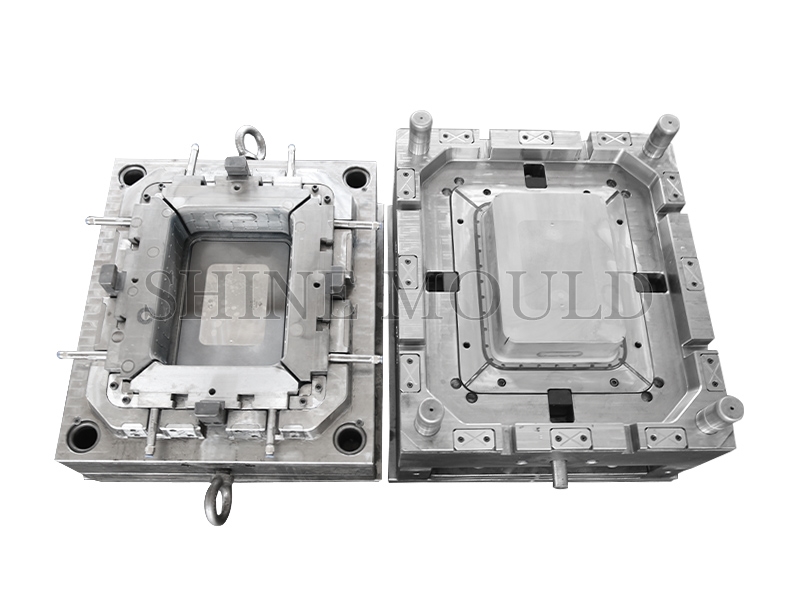
A Plastic Basket Mould does much more than create a shape. Every surface, opening, corner, and reinforcing section inside the mould affects the final product. Small variations during mould design can later appear as uneven edges, poor stacking behavior, or reduced structural stability.
In practical manufacturing environments, basket production often involves repeated cycles over long periods. Under such conditions, dimensional consistency becomes important. Baskets are frequently stacked, transported, and stored together. A slight variation from one product to another can affect how they fit, how they are handled, and how efficiently they are used.
Precision design helps maintain:
- consistent basket dimensions
- balanced structural support
- smoother product appearance
- reliable stacking performance
- stable production behavior
For many manufacturers, product quality starts long before material enters the machine. It begins during the design stage of the mould itself.
How Does Mould Structure Affect Material Flow During Injection
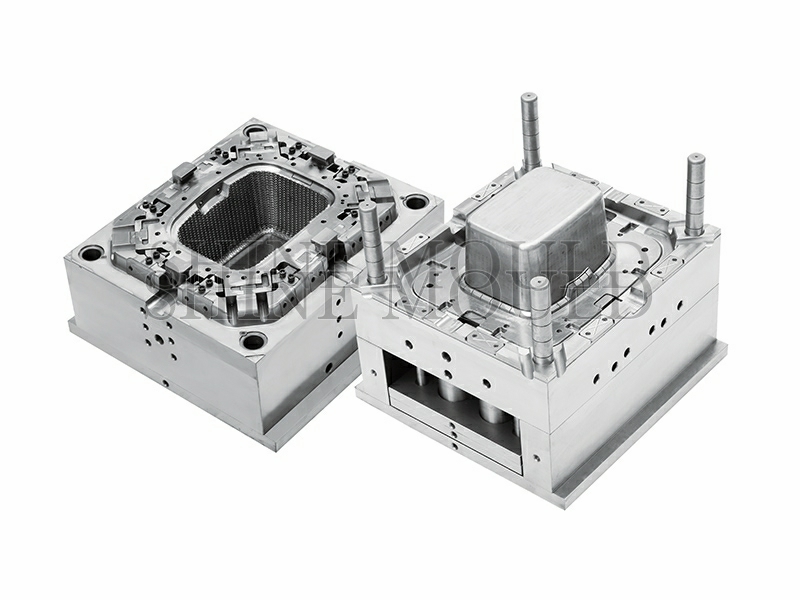
When material enters a mould cavity, it does not instantly fill every area at the same speed. The flow path follows the internal structure created by the mould designer. A well-planned Plastic Basket Mould allows material to travel through different sections in a controlled and balanced manner.
Basket products often contain numerous openings, ribs, support grids, and corner transitions. Material must reach all of these locations before cooling begins. Any imbalance in flow can influence product shape and consistency.
A useful way to imagine the process is to think about water moving through a network of channels. Areas with fewer restrictions fill quickly, while narrow passages slow the movement. Material inside a mould behaves in a similar way.
Several design factors influence flow behavior:
- layout of internal flow paths
- transition between thick and thin sections
- corner geometry
- distribution of support structures
- cavity balance
When flow remains balanced, the finished basket generally shows better consistency throughout the entire structure.
Why Is Wall Thickness Control Important In Basket Production
Many basket applications require a combination of light weight and structural strength. Achieving both depends heavily on wall thickness design.
A basket with uneven thickness often experiences uneven cooling. Some areas shrink differently from others, creating visible distortion or dimensional variation after production.
In daily life, the consequences become easy to recognize. A storage basket may wobble on a flat surface. A transport basket may not stack smoothly. A household basket may show slight twisting when loaded.
Wall thickness affects several practical characteristics:
- product stability
- structural rigidity
- cooling behavior
- material distribution
- overall appearance
Design teams usually try to maintain balanced thickness throughout the product whenever possible. Smooth transitions between different sections help material move more naturally during mould filling and reduce stress concentration after cooling.
Precision design is therefore closely connected to how a basket performs during everyday use rather than simply how it looks immediately after production.
How Do Cooling Channel Arrangements Affect Production Results
Cooling receives less attention outside manufacturing circles, yet it plays a major role in mould performance. During production, heat must leave the mould in a controlled manner. Uneven temperature distribution often creates uneven product behavior.
Inside a Plastic Basket Mould, cooling channels help guide heat away from different regions of the cavity. Their arrangement influences how uniformly the product cools after filling.
A practical example can be seen in a basket containing many grid openings. Some sections cool faster due to lower material volume, while reinforced areas may retain heat longer. Without balanced cooling, the product may change shape slightly during the cooling stage.
Well-planned cooling arrangements support:
- more uniform temperature distribution
- reduced deformation risk
- improved dimensional consistency
- smoother production cycles
- stable product shape
The objective is not rapid cooling alone. Temperature balance across the entire product often matters more than cooling speed by itself.
What Challenges Do Complex Basket Designs Create For Mould Accuracy
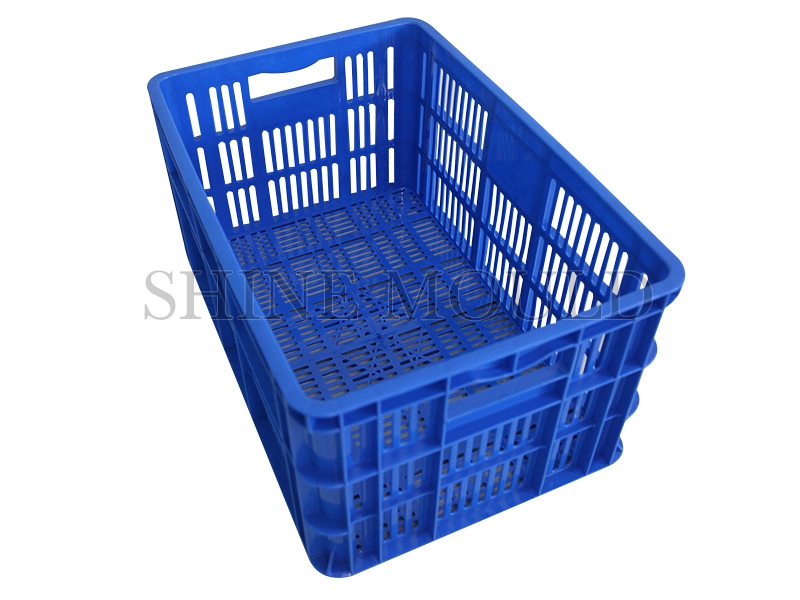
Basket products have evolved beyond simple storage containers. Modern designs frequently include ventilation openings, reinforced structures, ergonomic handling features, and stacking elements. Every additional feature increases mould complexity.
A simple solid shape is generally easier to manufacture than a basket filled with interconnected openings and structural details. Each opening creates another area where material flow, cooling behavior, and dimensional control must remain balanced.
Common design challenges include:
- maintaining consistent grid dimensions
- controlling corner transitions
- balancing reinforcement structures
- preserving overall product symmetry
- ensuring stable ejection after mould opening
The difficulty grows because all features must work together. A change in one area may influence material behavior elsewhere inside the cavity.
For a China Plastic Injection Mold Manufacturer, precision design often involves evaluating how every structural detail interacts with the complete basket rather than focusing on individual features alone.
| Design Element | Manufacturing Influence | Product Influence |
|---|---|---|
| Wall thickness | Material distribution | Structural stability |
| Flow path design | Filling balance | Shape consistency |
| Cooling arrangement | Temperature control | Reduced deformation |
| Reinforcement layout | Load distribution | Improved rigidity |
| Corner transitions | Flow continuity | Smoother appearance |
How Does Precision Design Help Reduce Product Defects
Defects rarely appear without a cause. In many cases, the root of the problem can be traced back to design decisions made long before production begins.
A basket may show warping because different sections cool unevenly. Surface irregularities may appear because material flow becomes restricted in certain locations. Dimensional variation may develop because structural support inside the mould lacks balance.
Precision design helps reduce such risks by considering the entire production process from the beginning.
Areas receiving close attention often include:
- material flow balance
- cavity geometry
- cooling distribution
- structural support placement
- product release behavior
Many common production challenges become easier to manage when potential problem areas are addressed during mould development rather than after manufacturing starts.
How Does Precision Design Support Reliable Daily Use
Consumers rarely think about mould design when using a basket. Attention usually focuses on whether the basket carries goods safely, stacks properly, and remains stable during handling.
Yet many of those practical characteristics originate from design decisions made inside the mould.
A basket used in agricultural environments may experience repeated loading and unloading. Storage baskets may spend long periods stacked together. Household baskets may be moved frequently between rooms.
Under such conditions, precision design contributes to:
- consistent load distribution
- stable stacking performance
- reliable shape retention
- balanced structural behavior
- smoother handling experience
Performance in everyday use is closely connected to manufacturing accuracy, even when that connection remains invisible to the end user.
Why Does Mould Durability Depend On Design Details
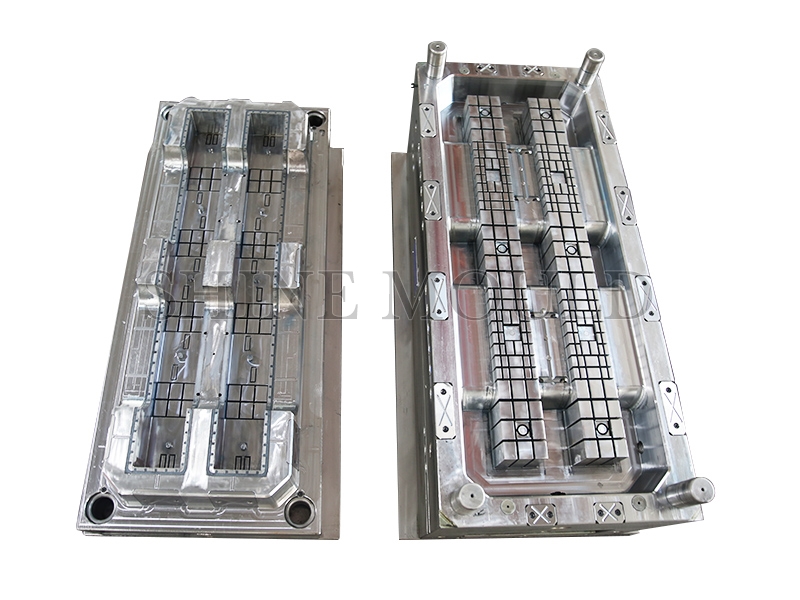
A Plastic Basket Mould works under repeated pressure, heating, cooling, and opening cycles. Over time, those repeated actions slowly reveal whether the internal structure was designed with balanced stress distribution or not. Durability is not only related to steel selection or machining quality, since design layout often decides where force travels during every cycle.
Inside a basket mould, many small sections carry different loads. Thin ribs, grid openings, and corner transitions do not behave the same way under pressure. Some areas receive constant stress, while others remain relatively stable. When design balance is weak, certain points begin to wear faster, and small deformation may appear after long use.
In real production environments, wear usually develops quietly:
- small polishing marks forming on high-contact areas
- slight mismatch appearing after long operation cycles
- local deformation in thin structural zones
- uneven surface contact during repeated closing and opening
A more stable design spreads force across a wider area. Instead of concentrating stress in a single point, load flows through multiple paths inside the mould. That kind of balance does not eliminate wear, though it slows down uneven fatigue and keeps product shape more stable over time.
Durability, in this sense, comes from how calmly the structure behaves under repetition.
How Does China Plastic Injection Mold Manufacturer Approach Precision Engineering
A China Plastic Injection Mold Manufacturer usually treats basket mould development as a layered process rather than a single design step. Before machining begins, attention is placed on how molten material will behave inside a complex cavity filled with openings, ribs, and thin sections.
The early design stage often focuses on how different forces interact during production:
- material pressure entering the cavity
- cooling changes across uneven thickness zones
- release behavior when the mould opens
- long-term stability under continuous cycles
Instead of treating each factor separately, these conditions are viewed together, since they affect one another once production starts.
A common design mindset includes:
- keeping cavity geometry stable across all sections
- avoiding sudden structural transitions that disturb flow
- balancing cooling influence across dense and open areas
- reducing unnecessary stress concentration points
Precision engineering in this context is less about complexity and more about control. A basket mould that behaves predictably during long runs reduces adjustment needs and keeps production rhythm smoother.
What Role Does Precision Design Play In Production Efficiency
Production efficiency inside mould-based manufacturing is often linked with how stable each cycle behaves. A Plastic Basket Mould with balanced design reduces unexpected variation, which means less interruption during continuous operation.
When material fills the cavity evenly and cooling behaves predictably, product output becomes more consistent. Operators do not need frequent correction or adjustment, and production flow remains more stable across long working periods.
Efficiency improvements usually appear in subtle ways:
- fewer interruptions during long production runs
- less variation between early and later products
- reduced need for repeated mould adjustment
- smoother product release from the cavity
In practical factory conditions, stability often matters more than raw output speed. A process that runs consistently allows planning to remain steady, even when production continues for extended hours.
Precision design supports this by reducing uncertainty inside the mould itself, allowing the machine to operate without constant correction from external adjustments.
Why Do Ejection Conditions Influence Final Basket Quality
After cooling, the basket must separate from the mould cavity. At this stage, product quality can still be affected even though the shape has already formed.
Basket structures often include open grids and thin connecting ribs. During ejection, uneven force distribution may create stress on certain sections if release conditions are not carefully controlled during design.
In real production, common issues include:
- slight bending during release from the cavity
- stress marks appearing on thin rib sections
- uneven separation between different areas of the basket
- minor deformation when cooling is not fully balanced
A well-designed mould considers how force moves during opening. Instead of pushing the product out in a single direction, release is guided through balanced movement across the entire structure.
Good ejection design helps maintain:
- shape stability
- surface integrity
- consistent product geometry
- reduced internal stress after release
Even after cooling is complete, release conditions remain part of final quality.
How Do Small Design Adjustments Influence Final Basket Behavior
Basket mould performance is often shaped by details that appear small during design but become noticeable during production and use. A slight change in rib thickness, corner radius, or flow path alignment can influence how material behaves inside the cavity.
For example:
- smoother corners help material move without sudden pressure buildup
- balanced rib spacing supports more even cooling
- consistent wall transitions reduce internal stress variation
- stable structural layout improves stacking behavior after production
Each change on its own may seem minor, yet combined together they shape the final performance of the basket.
In practical use, these small adjustments influence how baskets stack, carry load, and maintain shape during daily handling. A product used in storage or transport environments often reflects these design decisions more clearly than expected.
How Does Precision Design Influence Consistency Across Production Cycles
A Plastic Basket Mould is often expected to produce identical results across long production cycles. Consistency means every basket should behave in a similar way, whether produced at the beginning or after extended operation.
Precision design helps reduce variation by keeping internal conditions stable. When material flow, cooling behavior, and release movement remain controlled, output differences stay minimal.
Consistency benefits include:
- stable stacking between products
- predictable load behavior
- uniform appearance across batches
- reduced rejection during inspection
- smoother downstream handling
In real factory environments, consistency often reduces workload across multiple stages, not only during moulding but also in packing and logistics.
How Does Precision Design Support Long Term Development Of Plastic Basket Mould
As basket applications continue expanding into logistics, retail, agriculture, and storage systems, expectations for durability and stability continue to rise. A Plastic Basket Mould is no longer judged only by shape accuracy, but also by how reliably it performs under long-term production conditions.
Design precision becomes part of long-term adaptability. Moulds that maintain balance in flow, cooling, and release behavior can support a wider range of product variations without losing stability.
Future development tends to focus on:
- more stable internal structure layouts
- smoother material flow paths
- improved balance between open and reinforced sections
- consistent performance under repeated cycles
In this environment, precision design is not an extra feature. It becomes a basic requirement for maintaining predictable performance across changing production demands.
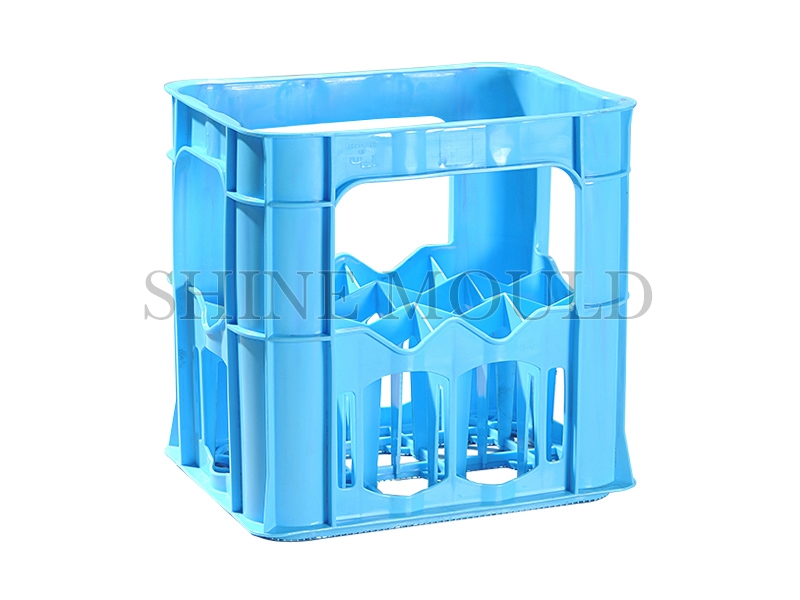
A basket may appear simple when used in daily life, yet its performance always traces back to the mould structure that formed it.
.jpg)
